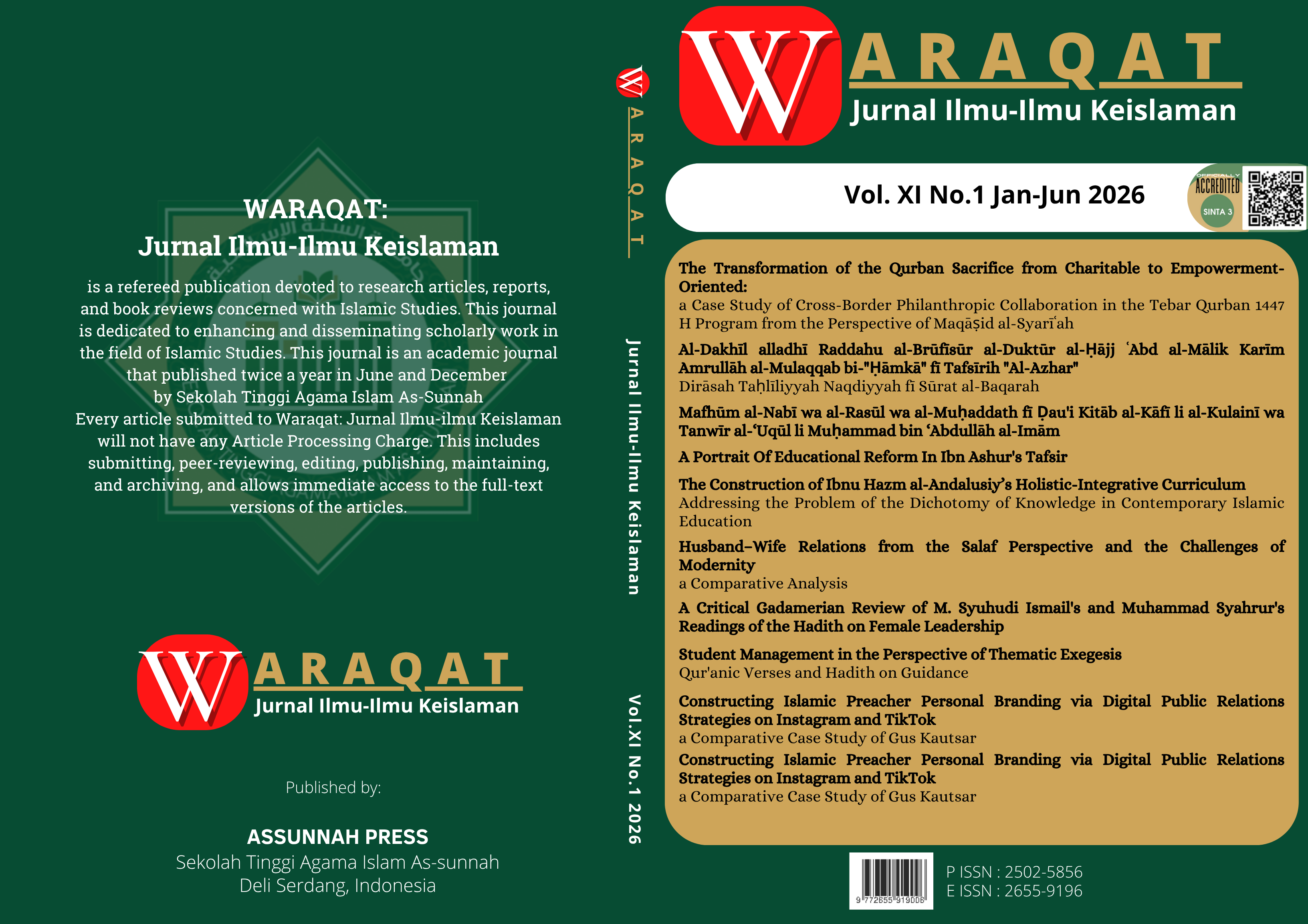
Al-Dakhīl alladhī Raddahu al-Brūfīsūr al-Duktūr al-Ḥājj ʿAbd al-Mālik Karīm Amrullāh al-Mulaqqab bi-"Ḥāmkā" fī Tafsīrih "Al-Azhar"
Dirāsah Taḥlīliyyah Naqdiyyah fī Sūrat al-Baqarah
DOI:
https://doi.org/10.51590/waraqat.v11i1.1322Keywords:
الدخيل، حامكا، تفسير، الأزهر، سورة البقرةAbstract
Tafsir al-Azhar by Hamka (Prof. Dr. Haji Abdul Malik Karim Amrullah) stands as one of the most influential contemporary Qur'anic commentaries in Indonesia and Southeast Asia, widely recognized for its balanced methodology and reform-oriented perspective. Nevertheless, no exegetical work is entirely immune from al-dakhīl — spurious or extraneous interpretive materials that have infiltrated the tafsir tradition. This reality demands critical scrutiny of how exegetes identify, evaluate, and reject such materials.
This study aims to identify instances of al-dakhīl explicitly rejected by Hamka in Tafsir al-Azhar within Sūrat al-Baqarah, and to analyze the scholarly principles underlying his rejection. An inductive method was employed to inventory relevant cases, complemented by a critical analytical approach to examine the rejected narratives and opinions alongside their academic justifications.
The findings reveal that the al-dakhīl rejected by Hamka encompasses Isrāʾīliyyāt traditions, weak narrations, mythological stories, and interpretations derived from unreliable or non-Islamic sources. In evaluating these materials, Hamka consistently applied two primary criteria: conformity with the Qur'an and authenticated Sunnah, and coherence with sound reasoning and established principles of Qur'anic exegesis.
This study underscores the critical-evaluative dimension of Hamka's exegetical methodology and his contribution to purifying the tafsir tradition from interpretively unsound materials. The findings enrich contemporary scholarship on exegetical criticism and al-dakhīl studies within the Indonesian Qur'anic interpretive tradition.
References
2. رضا، محمد رشيد بن علي. (1990م). تفسير القرآن الحكيم (تفسير المنار). القاهرة: الهيئة المصرية العامة للكتاب.
3. البغدادي، إسماعيل باشا. (1413هـ/1992م). هدية العارفين أسماء المؤلفين وآثار المصنفين. بيروت: دار الكتب العلمية.
4. الذهبي، شمس الدين أبو عبد الله محمد بن أحمد بن عثمان. (1405هـ/1985م). سير أعلام النبلاء (تحقيق: شعيب الأرناؤوط، ط3). بيروت: مؤسسة الرسالة.
5. الشهرستاني، محمد بن عبد الكريم. (د.ت). الملل والنحل (تحقيق: أحمد فهمي محمد). بيروت: دار الكتب العلمية.
6. الطبري، محمد بن جرير بن يزيد الآملي. (1420هـ/2000م). جامع البيان في تأويل آي القرآن (تحقيق: أحمد محمد شاكر، ط1). بيروت: مؤسسة الرسالة.
7. الرازي، فخر الدين محمد بن عمر بن الحسن. (1420هـ). مفاتيح الغيب (التفسير الكبير) (ط3). بيروت: دار إحياء التراث العربي.
8. ابن عساكر، علي بن الحسن. (1415هـ/1995م). تاريخ دمشق (تحقيق: عمرو بن غرامة العمروي). بيروت: دار الفكر.
9. ابن أبي حاتم، عبد الرحمن بن محمد بن إدريس الرازي. (1419هـ). تفسير القرآن العظيم (تحقيق: أسعد محمد الطيب، ط3). المملكة العربية السعودية: مكتبة نزار مصطفى الباز.
10. السيوطي، عبد الرحمن بن أبي بكر. (د.ت). الدر المنثور. بيروت: دار الفكر.
11. ابن كثير، إسماعيل بن عمر القرشي الدمشقي. (1420هـ/1999م). تفسير القرآن العظيم (تحقيق: سامي بن محمد سلامة، ط2). الرياض: دار طيبة للنشر والتوزيع.
12. عبد الرزاق الصنعاني، عبد الرزاق بن همام. (1419هـ). تفسير عبد الرزاق (تحقيق: محمود محمد عبده، ط1). بيروت: دار الكتب العلمية.
13. القرطبي، محمد بن أحمد الأنصاري. (1434هـ/2013م). الجامع لأحكام القرآن (تحقيق: عبد الله بن عبد المحسن التركي، ط1). بيروت: مؤسسة الرسالة.
14. ابن عطية الأندلسي، عبد الحق بن غالب. (1422هـ). المحرر الوجيز في تفسير الكتاب العزيز (تحقيق: عبد السلام عبد الشافي محمد، ط1). بيروت: دار الكتب العلمية.
15. ابن فارس، أحمد بن فارس بن زكرياء القزويني الرازي. (1399هـ/1979م). معجم مقاييس اللغة (تحقيق: عبد السلام محمد هارون). بيروت: دار الفكر.
Downloads
Published
Issue
Section
License
Copyright (c) 2026 Muhammad Irfan, Mahmoud Ahmed Mahmoud Mashour

This work is licensed under a Creative Commons Attribution 4.0 International License.







.png)